
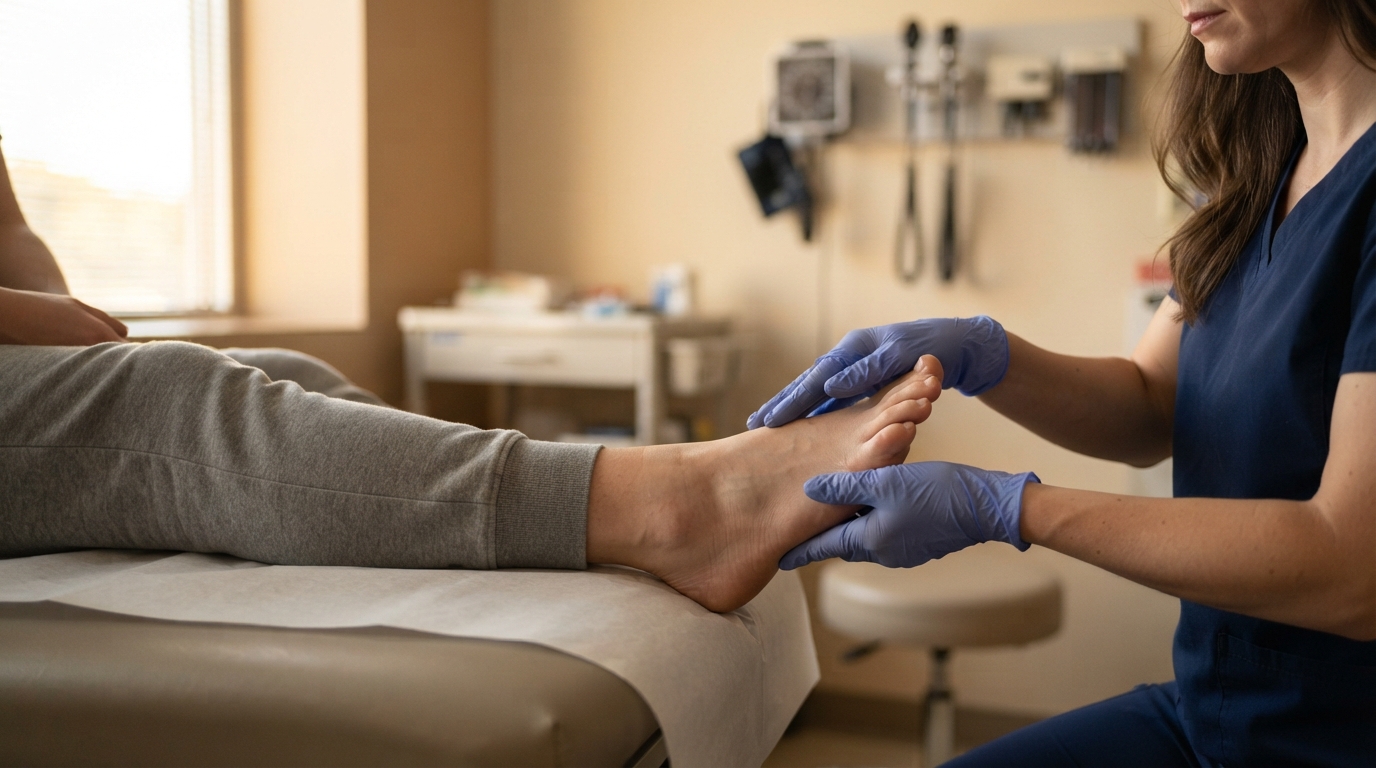
• Diabetic foot care focuses on daily self-checks, professional exams, and prompt treatment of cuts or sores to prevent infection and ulcers.
• Cypress, TX residents with diabetes benefit from at least one comprehensive podiatric foot exam per year, more often if nerve damage or circulation issues exist.
• Local podiatric offices can screen for neuropathy, vascular problems, and skin changes that patients often cannot detect on their own.
Diabetic foot complications develop quietly, often without pain, because nerve damage dulls sensation before visible symptoms appear. For patients managing diabetes in Cypress, consistent foot monitoring paired with professional evaluation is the most reliable way to catch small issues before they become serious.
Diabetes changes how the body handles minor foot injuries. Reduced circulation slows healing, while nerve damage can mask cuts, blisters, or pressure sores until infection sets in. This is why Diabetic Foot Care Cypress TX has become a routine part of diabetes management rather than an occasional afterthought, especially for patients with a history of foot problems.
Why Diabetic Feet Require Extra Attention
Diabetes affects the feet through two main pathways: nerve damage and poor blood flow. Both raise the risk of unnoticed injuries turning into wounds that resist healing.
• Neuropathy reduces the ability to feel cuts, blisters, or hot surfaces.
• Microvascular changes slow wound healing and increase infection risk.
• Musculoskeletal changes such as hammertoes can raise pressure points on the sole of the foot.
Individuals with diabetes are at increased risk of pedal ulceration due to microvascular, neuropathic, and biomechanical alterations in the foot, and neuropathy reduces pedal sensation while microvascular dysfunction impairs blood flow and delays wound healing. These combined factors are why routine self-checks alone are not always enough to catch early warning signs.
Daily Habits That Support Foot Health
Simple daily routines catch problems before they escalate. Patients managing diabetes should build these checks into an existing routine, such as after showering or before bed.
1. Inspect both feet, including between toes and the soles, using a mirror if needed.
2. Wash feet daily with lukewarm water and dry thoroughly, especially between toes.
3. Moisturize dry skin but avoid applying lotion between the toes.
4. Trim toenails straight across to prevent ingrown nails.
5. Wear well-fitting shoes and avoid walking barefoot, even indoors.
All patients with diabetes, including those with sensory loss, should receive education on proper foot self-care, including daily inspection and palpation or visual examination using an unbreakable mirror to detect early problems. This guidance applies regardless of whether a patient has noticed symptoms, since sensation loss can hide developing issues.
When Professional Screening Matters
Self-care reduces risk, but it cannot replace a clinical exam. Podiatric visits identify circulation and nerve issues that are difficult to detect without specialized testing.
|
Risk Level |
Recommended Exam Frequency |
Key Focus Areas |
|
No prior foot problems, good circulation |
Annually |
Skin, nail health, footwear fit |
|
History of ulcers, neuropathy, or deformity |
Every 3 to 6 months |
Pressure points, sensation testing, vascular checks |
|
Active wound or infection |
As directed by provider |
Wound care, offloading, infection control |
Since 10-20% of patients with diabetes who present for routine care will have a condition that requires prompt attention, such as calluses, bacterial or fungal infections, bulky or ingrown nails, or ulceration, it is important to inspect patients’ feet at every diabetes visit. This is one reason diabetes care teams often recommend building a podiatrist into the broader care plan rather than waiting for symptoms to appear.
According to the American Diabetes Association Standards of Care in Diabetes, all people with diabetes should receive general foot care education, provided as part of an annual comprehensive examination and at every visit for those with high-risk conditions. Patients with peripheral artery disease, prior ulcers, or Charcot foot may need more frequent monitoring under a coordinated care approach. An interprofessional approach facilitated by a podiatrist in conjunction with other appropriate team members is recommended for individuals with foot ulcers and high-risk feet, including those on dialysis, those with Charcot foot, and those with a history of prior ulcers or amputation.
Warning Signs That Need Prompt Evaluation
Certain changes should prompt a visit sooner rather than later. Waiting for pain is not a reliable indicator, since neuropathy can delay or eliminate that signal.
• Redness, swelling, or warmth in one area of the foot
• Cuts or blisters that have not started healing within a few days
• Changes in foot shape, new calluses, or skin discoloration
• Numbness, tingling, or burning sensations
• Any drainage or odor from a wound
Recognizing these signs early and seeking evaluation quickly can help prevent minor issues from progressing to infections that are harder to treat.
Frequently Asked Questions
How often should a diabetic patient have a foot exam? Most patients benefit from at least one comprehensive exam per year, with more frequent visits recommended for those with neuropathy, prior ulcers, or circulation problems.
Can diabetic foot problems be reversed once they start? Early-stage issues like calluses or minor skin changes often respond well to treatment, but nerve damage and advanced ulcers require ongoing management rather than a full reversal.
Is it normal for diabetic feet to feel numb? Numbness is common with diabetic neuropathy but should never be ignored, since it can mask injuries that need attention.
What should I bring to a diabetic foot care appointment? A list of current medications, recent blood sugar readings, and any concerns about specific symptoms helps the provider assess risk accurately.
Diabetic foot complications are largely preventable with consistent attention, but self-checks alone often miss subtle nerve or circulation changes that a trained eye can catch. Patients in the Cypress area who want a professional assessment can review patient experiences and contact information for Cypress Foot & Ankle Center to schedule an evaluation suited to their individual risk level.